


West Asia Shipping Disruptions Continue to Raise Export Logistics Risks
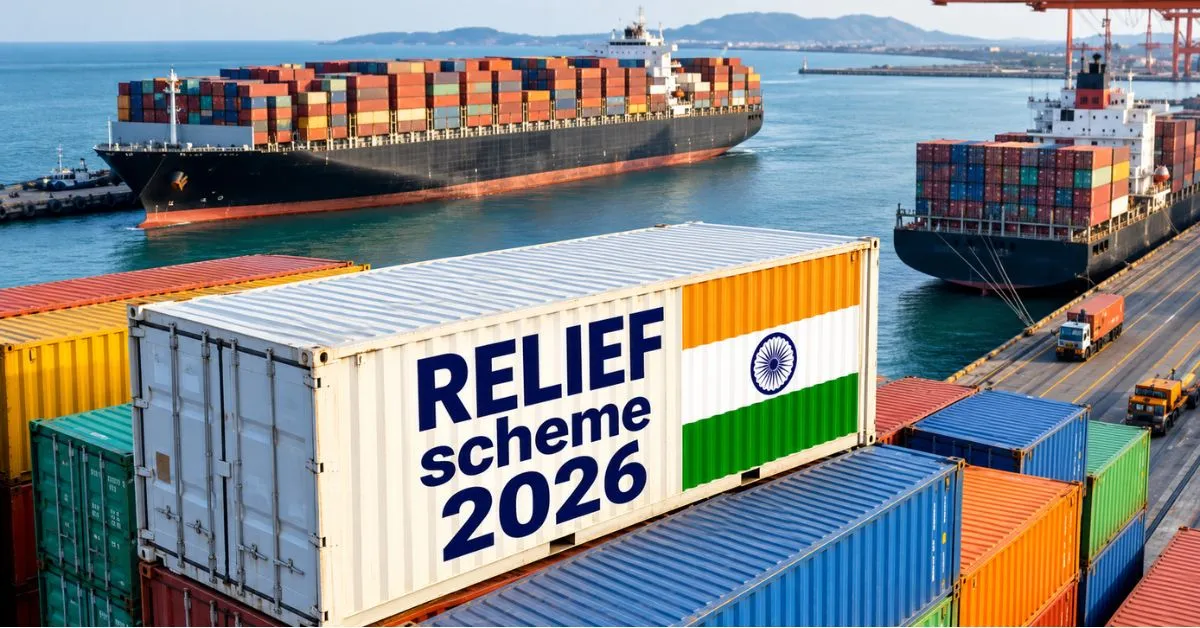
India extends exporter support as freight, insurance and maritime uncertainty continue across Gulf trade routes
Ongoing geopolitical disruptions in West Asia continue to affect maritime logistics across the Gulf and adjoining regions, highlighting the growing importance of freight planning, cargo insurance and supply-chain risk management for companies trading through the region.
On 30 September 2026, India's Department of Commerce extended the operational timeline of Component II of RELIEF — Resilience & Logistics Intervention for Export Facilitation, a programme introduced under the country's Export Promotion Mission to help exporters manage exceptional logistics and trade risks arising from disruption in the Gulf and wider West Asia maritime corridor. Press Information Bureau
While RELIEF is an Indian government programme for Indian exporters, the circumstances behind its extension carry a wider message for exporters and importers internationally: logistics risk has become an increasingly important part of export-market planning.
Why the Support Was Extended
The RELIEF programme was originally launched on 19 March 2026 in response to extraordinary freight escalation, increased insurance premiums and war-related export risks affecting Gulf and West Asian shipping routes. Press Information Bureau
The latest extension keeps enhanced insurance support available until 31 March 2027 for eligible shipments. Under Component II, exporters obtaining qualifying Export Credit Guarantee Corporation of India (ECGC) policies can receive 95% risk coverage. The programme also prevents eligible premiums from rising above pre-disruption levels during the applicable period. Maritime Gateway
Coverage includes Full Container Load (FCL), Less than Container Load (LCL) and reefer containers, excluding energy shipments. Press Information Bureau
The geographical scope was also expanded earlier in 2026 to include Egypt and Jordan, reflecting the wider effect of disruption on trade routes extending beyond the Gulf itself. Press Information Bureau
Logistics Risk Is Now Part of Export Strategy
The importance of the development goes beyond the Indian support programme.
Exporters using routes through the Gulf and West Asia have had to contend with issues including changing vessel routings, longer transit times, increased freight rates and other operational uncertainties. India's Directorate General of Shipping formally identified these concerns in guidance issued to exporters and maritime stakeholders earlier this year. Directorate General of Shipping
For exporters, these disruptions can affect several parts of a transaction simultaneously:
Freight Cost — Route changes, capacity constraints and additional carrier charges can significantly change landed costs.
Transit Time — Longer or less predictable shipping schedules can affect inventory planning and delivery commitments.
Cargo Insurance — Higher-risk trade corridors may require exporters to review insurance coverage and associated premiums.
Working Capital — Longer transit and payment cycles can leave capital tied up for additional periods.
Perishable Products — Food, agricultural products and other temperature-sensitive goods face additional risks when containers are delayed.
Buyer Relationships — Unexpected delays or additional costs can create commercial problems unless delivery responsibilities and communications are clearly managed.
A Particular Concern for SMEs
Large multinational companies can often diversify shipping routes, negotiate carrier contracts and maintain larger inventories.
Smaller exporters may have less flexibility.
A sudden increase in freight or insurance costs can reduce or eliminate the margin on an export order. Longer transit times can also create cash-flow pressure, particularly where payment is received only after shipment or delivery.
This makes logistics planning increasingly important before exporters quote their final prices to overseas buyers.
Instead of considering logistics only after receiving an order, exporters should understand likely freight costs, available routes, transit times, insurance requirements and contingency options during the quotation and market-development stage.
What Exporters Should Consider
Companies trading with or through potentially disrupted regions should regularly review:
Shipping routes and alternatives — Do not assume that the normal routing will always remain available.
Incoterms — Clearly understand which party bears freight, insurance and other transport risks.
Insurance coverage — Confirm what risks are covered and whether additional protection may be required.
Quotation validity — During periods of freight volatility, exporters may need shorter validity periods for quotations involving transportation costs.
Alternative ports and transshipment hubs — Identify alternatives before disruption occurs rather than after cargo has already been booked.
Inventory and delivery commitments — Allow realistic margins for possible delays, particularly for time-sensitive shipments.
Communication with buyers — Buyers should be informed early when external logistics conditions could materially affect delivery schedules.
From Lowest Freight Cost to Supply-Chain Resilience
For many years, logistics decisions were heavily influenced by finding the lowest transportation cost.
Recent disruptions demonstrate why exporters and importers increasingly need to consider another factor: resilience.
The cheapest route may not always represent the lowest overall business risk if a disruption results in delayed deliveries, additional storage, lost sales or damaged customer relationships.
For international businesses, logistics planning therefore increasingly involves balancing cost, reliability, transit time, insurance and alternative routing options.
India's decision to extend its RELIEF programme is one example of how governments and trade institutions are responding to this changing risk environment.
For exporters elsewhere, the broader lesson is equally relevant: shipping and logistics should be treated as part of export strategy, not simply as transportation arranged after the sale.
About the Source: Maritime Gateway
Maritime Gateway is a specialist shipping and logistics publication covering maritime trade, ports, shipping, cargo, logistics, infrastructure, technology and supply-chain developments, with a particular focus on South Asia.
The publication describes itself as “South Asia's Premier Shipping and Logistics News Portal.” Its coverage makes it a useful information source for companies and professionals monitoring developments in shipping, ports and international logistics. Maritime Gateway
Original Story
The GBM article above was developed from Maritime Gateway's report published on 3 October 2026:
Official Sources
The extension is confirmed by India's Ministry of Commerce & Industry. The official announcement states that continuing geopolitical disruption in West Asia is affecting maritime logistics across the Gulf and adjoining regions. Press Information Bureau
Official Government of India announcement — Ministry of Commerce & Industry
The original RELIEF framework was formally notified by India's Directorate General of Foreign Trade on 19 March 2026. DGFT Content