


Asia-Pacific Supply Chains Gain US$1 Billion Financing Support
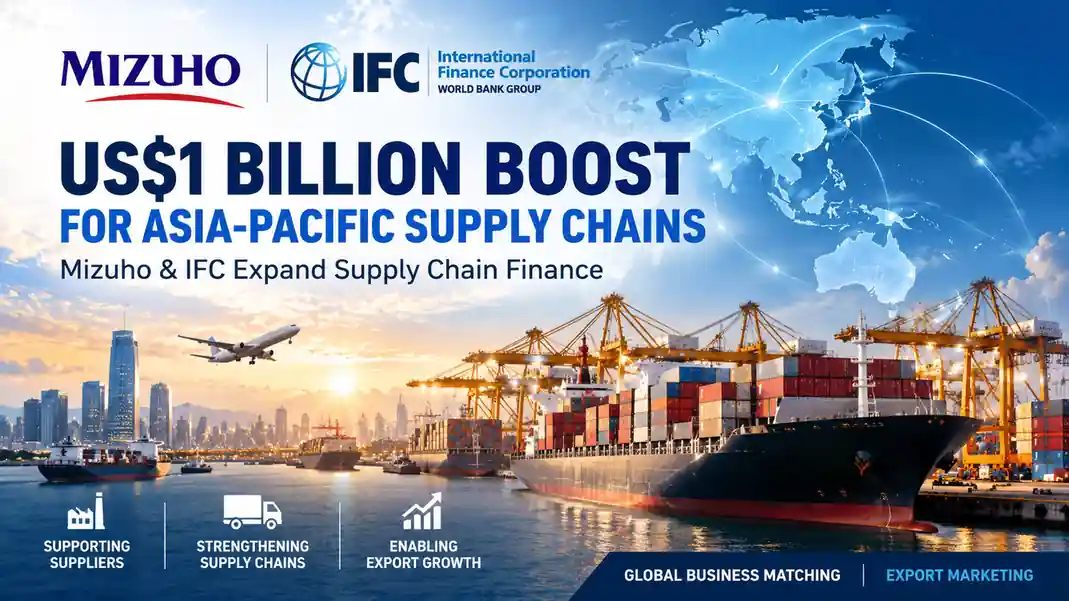
Mizuho and IFC partnership aims to expand working-capital access for suppliers and distributors across the region
Access to working capital remains one of the key challenges facing exporters, suppliers and distributors—particularly small and medium-sized enterprises seeking to expand internationally.
A new US$1 billion supply chain finance facility launched by Mizuho Bank and the International Finance Corporation (IFC), a member of the World Bank Group, aims to improve access to financing for businesses operating across Asia-Pacific supply chains.
The partnership was formally announced on September 29 during Sibos 2026 in Miami.
Under the three-year programme, IFC will provide up to US$500 million in risk-sharing, supporting a total facility of US$1 billion. Financing covered by the programme includes payables finance, receivables financing and pre-shipment financing.
Why this matters to exporters and suppliers
One of the biggest challenges for an exporter is the gap between receiving an order and actually receiving payment.
A supplier may need to purchase raw materials, manufacture products, prepare packaging and arrange shipment long before the overseas buyer pays the invoice.
For SMEs in particular, this working-capital gap can restrict their ability to accept larger orders or expand into new markets.
Supply chain finance can help eligible suppliers receive payment earlier against approved transactions. In some structures, financing can benefit from the stronger credit standing of a large buyer rather than relying entirely on the financial strength of the smaller supplier.
For distributors, improved access to finance can similarly support inventory purchases and help maintain business continuity when payment cycles are extended.
Supporting stronger Asia-Pacific supply chains
The new facility is particularly aimed at addressing working-capital constraints faced by suppliers and distributors in Asia-Pacific emerging markets.
Mizuho will originate the supply chain finance assets, while IFC's participation provides a 50/50 risk-sharing structure, with IFC contributing up to US$500 million. Initial assets are expected to support obligors in the Asia-Pacific region.
The programme forms part of IFC's broader Global Supply Chain Finance initiative, which uses partnerships with financial institutions to expand financing available to emerging-market suppliers.
What this means for Asian SMEs
The significance goes beyond one banking transaction.
For Asian manufacturers and exporters, international expansion is not determined only by whether they can find overseas buyers. Businesses must also have sufficient financial capacity to manufacture, hold inventory, ship goods and wait for payment.
This is particularly important when working with large international buyers that may request longer payment terms.
Initiatives such as the Mizuho–IFC facility illustrate how trade finance is increasingly becoming part of the wider infrastructure supporting buyers, suppliers and distributors across international supply chains.
For SMEs seeking to expand exports, the lesson is clear: finding the right buyer remains essential, but understanding payment terms, working-capital requirements and available trade-finance solutions should also be part of export planning.